DKS ServiceWorks DKS ServiceWorks

2026 Top Corded vs Cordless Drills Which Is Best?

Time:2026-11-12 Author:Henry
0%

A drill can feel like a small purchase until a dead battery stops a job halfway through. In 2026, both corded and cordless models offer serious power, but they solve different problems. A corded drill delivers steady performance as long as an outlet is nearby. A cordless model trades that constant supply for mobility, faster setup, and fewer cables across the floor. Neither option wins every task.

This guide compares the differences that matter in real work: power, runtime, portability, cost, maintenance, and typical use. It also looks at how battery capacity, charging time, and tool weight affect longer jobs. A compact cordless drill may be ideal for assembling shelves or working on a ladder. For repeated drilling through dense material, a corded model can make more sense—provided the cable reaches safely. That detail is easy to overlook.

The best choice depends on your workspace, materials, and tolerance for interruptions. Think about whether you have reliable access to power, how often you drill, and whether you already own compatible batteries. Then consider how to choose between corded and cordless drills without paying for features you rarely use. A high torque rating alone does not guarantee a better fit. Nor does a large battery solve every access problem. The comparison that follows aims to make those trade-offs clear, while recognizing that tool specifications and results vary by model, bit, and material. A little uncertainty is useful here; the “best” drill is the one that suits the work in front of you.
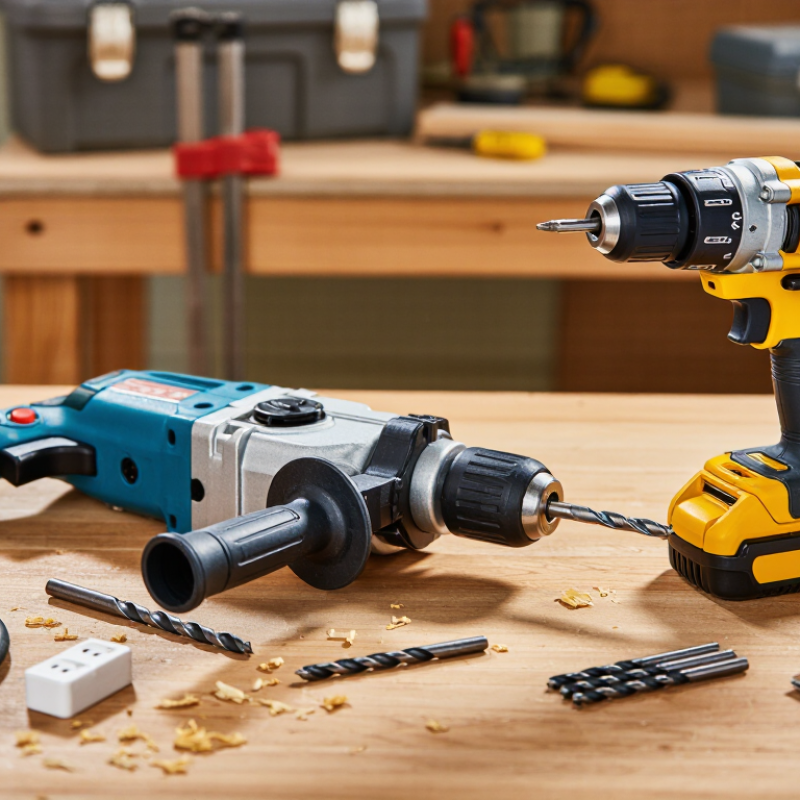
2026 Top Corded vs Cordless Drills Which Is Best?

What Are Corded and Cordless Drills?

A corded drill draws power directly from a wall outlet through its cable. Plug it in, and it can keep drilling without waiting for a battery to recharge. This suits a workbench, where outlets are close and long sessions are common. No battery swaps. The cable, however, can snag on a bench leg or limit movement across a room.

A cordless drill runs on a rechargeable battery fitted into its handle or base. It is easier to carry between rooms, use on a ladder, or take to a site without a nearby outlet. Its runtime depends on battery capacity, material, drill bit, and workload. A small battery may feel light, but it can run down quickly when driving many screws into dense timber. Keep a spare charged if the job cannot pause.

Both types turn a bit to bore holes or drive fasteners, but neither is automatically more powerful. Motor design and gearing matter, too. For occasional shelf repairs, portability may matter more than uninterrupted runtime. For repetitive drilling at one station, a cord can be less hassle than monitoring charge. That is not always obvious at purchase. A drill’s weight, balance, and grip become noticeable after several minutes of overhead work.

How Do Their Power Systems and Performance Differ?

Corded drills draw power continuously from an electrical outlet, so their performance stays consistent during long jobs. Their motor can keep drilling through dense timber without waiting for a battery to recharge. For repeated holes in a workshop, that steady supply is useful. The cord has a cost, though. It can snag on a ladder, cross a work area, or limit how far you can move. Keep it clear of the bit and the workpiece.

Cordless drills store energy in a rechargeable battery, making them easier to carry between rooms or use overhead. A fully charged battery can handle many everyday tasks, but output may fall as its charge drops or the motor works hard. A 5 mm bit in soft pine feels very different from a large bit in hardwood. Battery capacity affects runtime, while voltage alone does not tell the whole performance story. Cold conditions can also reduce usable battery power. Not always dramatically. In practical use, the drill’s motor, gearing, bit choice, and pressure all matter. It is easy to blame the tool when a dull bit is the real problem. For long, repetitive drilling, corded power is often more predictable; for scattered jobs, cordless convenience may outweigh that consistency.

How Do Cost, Portability, and Maintenance Compare?

Corded drills usually cost less upfront because the kit needs no battery or charger. They suit a fixed workbench, where an outlet is close and long sessions are common. Cordless kits cost more, especially when a second battery is needed. That extra pack can prevent a job from stalling halfway through.

Battery costs deserve careful context. The U.S. Department of Energy’s 2023 battery-cost assessment reports that automotive lithium-ion pack costs fell from $1,355 per kilowatt-hour in 2008 to $153 in 2022. That trend does not predict drill-battery prices, but it shows why battery economics keep changing. For a fair comparison, include the drill, charger, spare packs, and likely replacement—not just the shelf price. Small detail, big difference.

Portability is the cordless drill’s clear advantage. It reaches a fence post or attic corner without a trailing cable. A corded model avoids charging delays and battery aging, but its cable can snag around a ladder or bench leg. Maintenance is simple for both, though not identical: check cord insulation and strain relief on corded tools; keep cordless batteries dry, cool, and clean around their contacts. Dust the vents, too. It is easy to neglect. Some motors also use replaceable brushes, while brushless designs avoid that service item. I would still check the manual; the label alone does not tell the whole maintenance story.

Which Drill Type Suits Different Tasks and Work Environments?

The right drill depends on the work area, the length of each job, and access to power. In a fixed workshop, a corded drill can suit repeated drilling or long sessions because it does not need battery changes. Power stays steady. A nearby outlet matters, though, and a trailing cord can snag on clamps or cross a busy floor. Use a suitable extension cord and keep it clear of the workpiece. For occasional home repairs, that setup may feel like more trouble than it is worth.

A cordless drill is easier to carry between rooms, up a ladder, or across a site without outlets. It is useful for fitting shelves, assembling furniture, and drilling a few holes outdoors. For a full day of work, plan for battery runtime: a spare charged battery can prevent delays, but adds cost and weight. Check the drill’s torque, speed settings, and battery capacity against the material and bit size; corded does not automatically mean stronger. Small detail, big difference. The choice is not always tidy: a heavy cordless model can tire your wrist overhead, while a corded one may be awkward in a cramped cabinet. Match the tool to the task you actually repeat.

2026 Top Corded vs Cordless Drills Which Is Best? - Which Drill Type Suits Different Tasks and Work Environments?

Comparison Corded Drill Cordless Drill
Power source Runs from a mains outlet through a power cord. Runs on a rechargeable battery; common tool battery platforms are rated in volts.
Power during continuous work Can keep running while connected to a suitable power supply, making it useful for long drilling sessions. Work time per charge varies with battery capacity, material, bit size, tool settings, and workload; spare batteries can reduce interruptions.
Mobility and reach Limited by cord length and access to an outlet; the cord can snag or restrict movement. Easy to carry between locations and useful where outlets are unavailable or inconvenient.
Typical task fit Repeated drilling at a fixed workbench, workshop jobs, and tasks that require extended operation near a power outlet. Driving screws, furniture assembly, household repairs, installation work, and drilling at changing locations.
Work-at-height suitability The cord may be awkward to manage on ladders or elevated work areas and must be kept clear of the work zone. Usually more convenient on ladders, scaffolds, and overhead tasks because there is no trailing power cord.
Weight and handling Tool weight varies by model; handling also includes managing the cord. The battery adds weight, and the overall balance depends on the tool and battery size.
Setup and upkeep No battery charging is needed, but the cord, plug, and power supply should be checked for damage before use. Requires charging and battery care; battery capacity may decline with age and repeated use.
Best work environment A workshop or indoor site with reliable power, a stable work area, and manageable cord routing. Remote sites, service calls, occupied homes, outdoor work, and areas where moving freely matters.
Main limitation Needs a suitable outlet and safe cord management; it is less convenient to transport between work areas. Work is limited by battery charge and spare-battery availability; batteries add weight and require charging.
Choosing guidance Choose a corded model when work is mostly stationary and uninterrupted operation is a priority. Choose a cordless model when portability, quick setup, and access to tight or elevated areas matter most.

Note: Performance varies by model, bit, material, and operating conditions. Corded wattage and cordless battery voltage describe different electrical characteristics and should not be compared as direct measures of drilling performance.

How to Choose the Best Drill for Your Needs in 2026

Choosing the best drill for your needs in 2026 starts with the work you actually do. For a few holes in indoor walls or assembling furniture, a cordless drill is usually easier to carry and store. Check its battery capacity, and consider whether a spare battery is practical for longer jobs. A full charge does not guarantee steady power through every material.

A corded drill can make sense for extended work near an outlet. It avoids battery changes, but the cable can snag on a ladder or limit movement across a room. That matters. Think about where you will work, not just how powerful the drill sounds on paper. For masonry, confirm that the model has a hammer-drill setting; a standard drill may struggle.

Compare more than power ratings. Look at the chuck size, clutch settings, weight, and how comfortably the handle fits your hand. If possible, hold the drill before buying it. A tool that feels manageable in the store may still tire your wrist during overhead work. One easy mistake is choosing the highest voltage without checking runtime or balance. I would reconsider that trade-off: a lighter drill with enough power for your regular tasks may be more useful than a heavier one that rarely leaves the cupboard.

FAQS

When is a corded drill a good choice?

It suits repeated drilling or long sessions near an outlet. Power stays steady. The cord can snag on clamps.

What jobs suit a cordless drill?

It is handy for assembling furniture, fitting shelves, and drilling a few holes outdoors. No outlet needed.

Should I buy a spare battery for a cordless drill?

A charged spare can reduce delays during longer jobs. It also adds weight and cost. Not always worth it.

Can a standard drill handle masonry?

Check for a hammer-drill setting before drilling masonry. A standard drill may struggle with that material.

What should I compare besides power ratings?

Check chuck size, clutch settings, weight, battery capacity, and handle comfort. Numbers don’t tell the whole story.

Does a higher-voltage drill always work better?

Not necessarily. A heavier model may tire your wrist, while a lighter drill may suit your regular tasks better.

How can I tell whether a drill feels comfortable?

Hold it if possible, then consider how it might feel overhead. A quick store test is imperfect, but useful.

Is a corded drill practical for occasional home repairs?

It can be, but the cable may feel awkward in a cramped cabinet. For a few indoor jobs, cordless may be easier to carry and store.

Conclusion

Corded and cordless drills serve the same basic purpose but suit different working styles. A corded drill draws continuous power from an outlet, making it a dependable choice for long sessions and demanding tasks where steady performance matters. A cordless drill runs on a rechargeable battery, offering greater freedom of movement and easier use in tight spaces or locations without convenient access to power. Their power, runtime, weight, and maintenance needs can vary, so the best option depends on the work rather than one type being universally superior.

When considering how to choose between corded and cordless drills, think about the materials you work with, how often and where you drill, and whether uninterrupted power or portability matters more. Corded models can be practical for a fixed workshop, while cordless models are often more convenient for mobile tasks and everyday repairs. Compare the full cost, including batteries or accessories, and consider storage and upkeep. Matching the drill to your workload and work environment will help you choose a useful tool for 2026.

Henry

Henry

Henry is a dedicated marketing professional with a profound expertise in the company's offerings. With years of experience in the industry, he possesses an impressive understanding of the market dynamics and consumer behaviors that drive success. Henry is committed to sharing his insights through......