 DKS ServiceWorks
DKS ServiceWorks
DKS ServiceWorks
When embarking on a construction or renovation project, choosing the right tool is crucial. Many people face the dilemma of selecting between a hammer drill and a rotary hammer. It's essential to understand what is the difference between a hammer drill and a rotary hammer. Both tools serve specific purposes and have unique features.
Hammer drills are ideal for drilling into masonry or concrete. They offer a simple way to create holes, using a rapid hammering motion. In contrast, rotary hammers are more powerful. They excel in heavy-duty tasks, delivering stronger blows that break through tough materials. The difference in power defines their applications.
Choosing the right tool can be confusing. Consider your project needs carefully. If you only need to drill a few holes, a hammer drill might suffice. However, for extensive work, a rotary hammer proves more efficient. Understanding these distinctions is key to selecting the appropriate tool for your tasks.
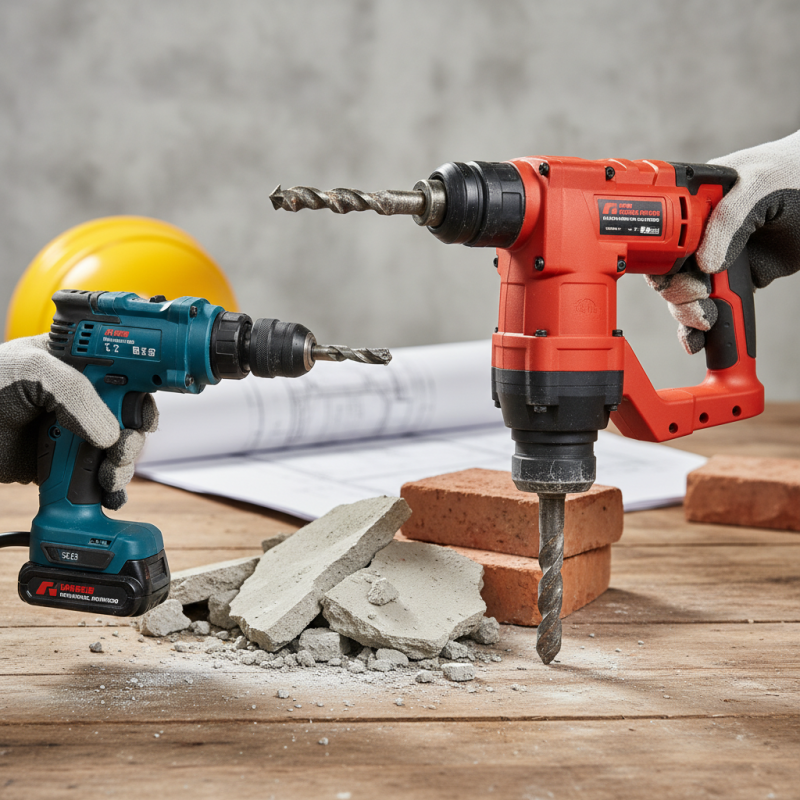
When selecting between a hammer drill and a rotary hammer, it's crucial to grasp their basic functions. Hammer drills combine rotational and hammering motions. They excel at drilling into materials like wood, masonry, and light concrete. Conversely, rotary hammers are designed for heavy-duty tasks. They are powerful tools primarily used for breaking and drilling into hard surfaces, including reinforced concrete.
Industry reports highlight that approximately 45% of professionals prefer rotary hammers for concrete jobs due to their efficiency. These tools can deliver up to 5 joules of energy in each blow. In contrast, hammer drills offer around 1.2 joules. This stark difference underscores why rotary hammers are favored for tough applications. However, the weight of a rotary hammer can be a drawback. They are typically heavier and may lead to user fatigue during extended work periods.
Understanding the specific needs of your projects can influence your choice. If your work demands versatility and ease, a hammer drill may suffice. Yet, for extensive concrete work, a rotary hammer is often necessary. It's essential to assess the types of materials you frequently encounter. A tool that excels at one task may not perform well at another. Finding the right balance can significantly enhance your project's outcome.
| Feature | Hammer Drill | Rotary Hammer |
|---|---|---|
| Impact Mechanism | Clutch mechanism generating hammering action | Pneumatic mechanism for powerful impact |
| Drilling Capacity | Generally for wood, metal, and masonry | Designed for heavy-duty drilling in concrete |
| Weight | Usually lighter, easier to handle for prolonged use | Heavier, but better suited for tough jobs |
| Bit Types | Uses standard drill bits | Requires special SDS bits |
| Applications | Light masonry, drywall, woodwork | Heavy-duty concrete and construction work |
| Cost | Generally more affordable | More expensive due to advanced technology |
: Consider the material you'll work with. Rotary hammers work better on concrete, while hammer drills suit softer materials.
A hammer drill is lighter and easier to handle for small jobs like drilling into wood or brick.
Rotary hammers excel in heavy-duty tasks. They deliver powerful impacts using a pneumatic mechanism for tough materials.
Novices may find hammer drills easier. As skills improve, a rotary hammer can be more beneficial for larger tasks.
Yes, rotary hammers tend to be heavier and may not be ideal for casual users or those with limited strength.
Yes, corded tools offer stronger performance, while cordless options provide more portability for various project needs.
It can, but it may struggle with tough materials like reinforced concrete. Consider a rotary hammer for those jobs.
If your task is tougher, a hammer drill may lead to dissatisfaction. Always reflect on your specific project needs.
When deciding between a hammer drill and a rotary hammer, it's essential to understand the differences between these two tools. Hammer drills are designed for drilling into softer materials like wood and light masonry, using a hammering action alongside rotation. In contrast, rotary hammers are more powerful and suitable for heavier tasks, effectively breaking through hard materials like concrete and stone with a combination of rotation and a stronger hammering force.
Several factors come into play when choosing the right tool for your needs, such as the type of material you'll be working with and the scale of the project. Common applications often dictate the choice; for example, hammer drills are ideal for DIY projects, while rotary hammers excel in professional construction settings. Ultimately, understanding what is the difference between hammer drill and rotary hammer will aid in selecting the best tool for specific tasks, ensuring efficiency and effectiveness in your projects.
