DKS ServiceWorks DKS ServiceWorks

What Is a Nail Gun and How Can You Avoid Accidents?

Time:2026-11-05 Author:Amelia
0%

A nail gun turns compressed air, electricity, or fuel into a fast-moving force. On a busy worksite, it can drive a nail through timber in a fraction of a second—and through a finger just as quickly. The danger is measurable. NIOSH’s nail-gun safety guidance reports an estimated 37,000 emergency department visits annually in the United States during 2005–2009, including injuries to construction workers and consumers. These figures are historical, but the hazards remain familiar: unintended firing, awkward positioning, and hands placed near the nail’s path.

Occupational injury researcher Dr. Hester Lipscomb has studied nail-gun injuries and prevention among residential carpenters. Her research supports a practical lesson: safer tools and work habits must go together. NIOSH’s guidance puts one control plainly: “Use full sequential trigger nail guns.” That does not replace training or attention. A trigger can still fire at the wrong moment.

This guide explains what a nail gun is, how its trigger and contact tip work, and how to avoid accidents when using nail guns. Expect concrete steps: choose the right trigger, keep your free hand clear, wear eye protection, and disconnect power before clearing a jam. A small pause matters. Even experienced users can become careless when the work speeds up; recognizing that risk is part of using the tool responsibly.
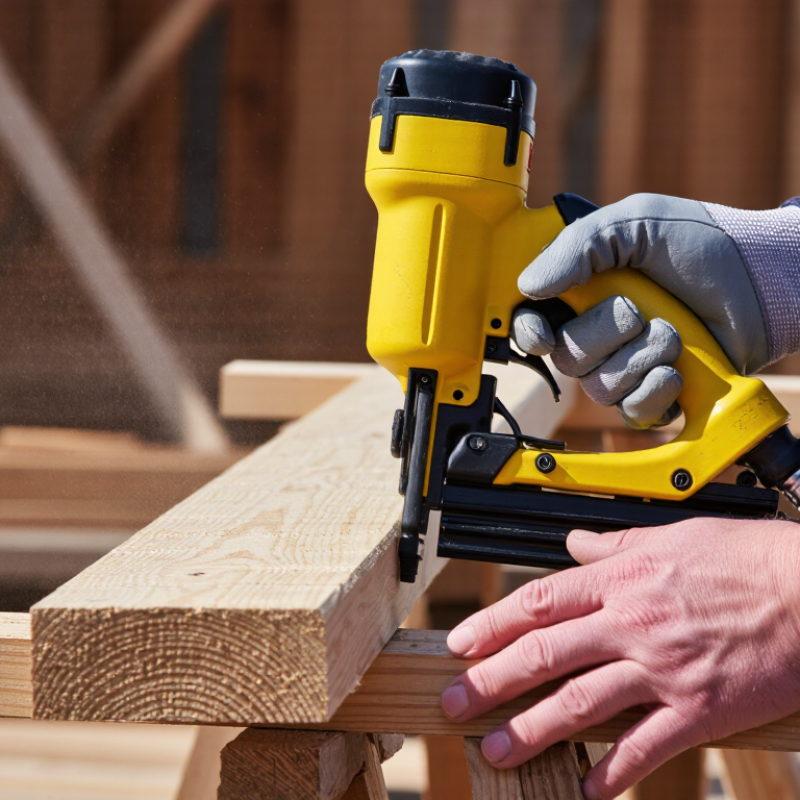
What Is a Nail Gun and How Can You Avoid Accidents?

What a Nail Gun Is and How It Fastens Materials

A nail gun is a powered tool that drives nails into materials, usually wood. It can use compressed air, a battery, or another power system, depending on its design. Inside the tool, a driver pushes one nail forward with enough force to fasten pieces together. The nails are often held in a strip or coil inside a magazine. That saves time compared with placing each nail by hand.

When the user activates the tool, its feeding mechanism moves a nail into position. The driver then sends it through the material and into a supporting surface, such as a wooden stud. The nail’s head helps hold the joined pieces in place. Some models allow users to adjust how deeply nails sit; a test on scrap wood can help prevent proud heads or damaged surfaces. Small details matter.

A nail gun is not simply a faster hammer. Different tools suit different jobs, and the correct nail length and type depend on the materials being joined. A nail that is too short may not hold well, while one that is too long can emerge from the far side. The mechanism sounds straightforward, but its force can be easy to underestimate. Keep hands clear of the firing area, and follow the tool’s instructions.

The Main Parts and Basic Operating Mechanism

A nail gun drives fasteners with a spring, compressed air, fuel, or an electric motor, depending on its design. Its main parts usually include a handle, trigger, magazine, nosepiece, and internal driver blade. The magazine holds nails in a strip or coil. At the nose, a contact element helps control when the tool can fire.

When activated, the power source moves a piston or similar mechanism, sending the driver blade forward. The blade pushes one nail through the nosepiece and into the material. The exact sequence varies. Some tools require the nosepiece to press against a surface before the trigger works; others allow different firing sequences. Check the tool’s manual. Small differences matter.

A practical safety check starts with the tool disconnected from its power source. Keep your finger off the trigger while loading, and point the nosepiece away from yourself and others. Wear eye protection; tiny wood or metal fragments can fly. Before firing, make sure the workpiece is stable and know what lies behind it. If a nail jams, don’t reach into the nosepiece while the tool is connected. I’ve seen people treat the contact element like a harmless button. It isn’t. Even a brief, careless press can drive a nail unexpectedly.

What Is a Nail Gun and How Can You Avoid Accidents? — The Main Parts and Basic Operating Mechanism
Part or Feature What It Does Basic Operating Mechanism Accident-Prevention Practice
Housing and handle Enclose the tool’s working components and provide a grip for control. The operator positions and steadies the tool using the handle while keeping the muzzle directed toward the work. Check for cracks, loose parts, or damage before use. Keep a firm grip and never carry the tool by its trigger.
Magazine Holds a compatible strip or coil of nails and feeds nails toward the firing area. A spring or feed mechanism advances the next nail into position after a fastener is driven. Use only the fastener type and size specified for the tool. Disconnect the power source before loading or clearing a jam, as directed by the manual.
Contact safety tip Also called the work-contact element; it is designed to contact the work surface as part of the firing sequence. Depending on the tool and its actuation mode, contact with the surface is combined with a trigger action to permit firing. Keep hands and other body parts away from the muzzle and the area where the nail may exit. Never tape down, remove, or bypass the safety tip.
Trigger and actuation mode Controls when the tool is permitted to drive a nail. Some tools use sequential actuation, requiring the contact tip and trigger to be operated in a specified order. Contact actuation may allow firing actions in a different sequence. Modes vary by tool. Know the tool’s actuation mode before use. Use the mode required by the task and workplace rules; keep your finger off the trigger until ready to fasten.
Power source Supplies energy to drive the fastener. Common types use compressed air, a battery, or fuel and a battery. Compressed-air models use air pressure; cordless models use a battery-powered drive system, with some models also using fuel combustion. Follow the manufacturer’s instructions for connecting, adjusting, charging, or removing the power source. Disconnect or remove it before maintenance or jam clearing when instructed.
Driver blade or piston Transfers energy to the nail to drive it into the material. When the firing system is activated, the driver moves rapidly through the nose area and pushes the nail into the workpiece. Never point the muzzle at yourself or another person, even when the tool appears empty or disconnected. Treat every nail gun as capable of firing.
Muzzle or nose Guides the fastener toward the work surface and contains the contact area. The nail travels from the magazine through the nose as the driver moves forward. Position the nose firmly and squarely on the intended work area. Do not place a hand near the nail’s exit point or fasten near concealed wires, pipes, or other hazards.
Depth adjustment On models that include it, helps control how deeply a nail is driven. An adjustment changes the tool’s setting; the result also depends on the material, fastener, and power setting. Test the setting on scrap material first. Make adjustments only as described in the manual and with the tool made safe as instructed.
Basic firing cycle Describes how a nail is driven during normal operation. The operator positions the tool, the required safety and trigger actions occur, the drive system moves the driver, and the magazine feeds the next nail. Maintain a stable stance and clear work area. Do not operate the tool while tired, distracted, or under the influence of substances that impair judgment.
Personal protective equipment Helps reduce exposure to flying particles and noise. Protective equipment does not prevent the tool from firing; it adds a layer of protection during work. Wear safety glasses with side protection and hearing protection where noise levels require it. Follow site rules for any additional protective equipment.
Jam clearing and maintenance Restores safe, reliable operation when a fastener is stuck or the tool needs service. Procedures differ by model; stored energy may remain in some tools even after the power source is disconnected. Follow the model-specific manual. Keep the muzzle pointed away from people, disconnect the power source as directed, and do not use a damaged or malfunctioning tool.

Common Types of Nail Guns and Their Uses

Nail guns drive nails quickly, but each type suits a different task. A framing nailer handles larger nails for wall studs, roof framing, and deck structures. It delivers force, so check what lies behind the work surface before firing. A roofing nailer uses short, wide-headed nails to secure shingles. Its magazine is designed for repeated fastening across broad roof areas.

Finish nailers suit trim, door casings, and cabinet work, where a smaller hole matters. Brad nailers use thinner nails for delicate molding and light trim. Pin nailers leave tiny holes, making them useful for narrow pieces that may split under larger fasteners. Flooring nailers, meanwhile, drive cleats or staples at an angle to secure floorboards. Choosing by material thickness and nail size matters more than choosing by speed. That part is easy to overlook.

Tips: Wear eye protection, keep your free hand clear of the firing area, and point the tool away from people. Use sequential firing when available for better control. Disconnect the power or air supply before clearing a jam, and follow the tool’s manual. Test the setting on scrap wood first. A nail can emerge through thin stock or strike a hidden wire. Even careful users can misjudge the surface.

Common Types of Nail Guns and Their Uses

Typical fastener length (inches): These examples show commonly used lengths, not fixed limits; the correct fastener depends on the tool, material, and task. Framing nailers are used for structural framing, roofing nailers for shingles, siding nailers for exterior siding, finish nailers for trim and molding, brad nailers for lighter trim, and pin nailers for delicate detail work.

Work safely: Wear eye protection, keep hands clear of the nailing area, and disconnect the power or air supply before clearing a jam. Never bypass a nail gun’s safety mechanism.

How Nail Gun Accidents Happen and Who Is at Risk

Nail-gun accidents often happen in a split second: a worker shifts grip, the tool bumps a board, and a nail fires before the tip is firmly placed. A nail can also pass through thin material or glance off a knot, sending it toward a hand or nearby coworker. In its 2005 report, “Nail-Gun Injuries Treated in Emergency Departments,” the U.S. Centers for Disease Control and Prevention estimated about 37,000 emergency-room-treated injuries each year, including roughly 14,800 work-related cases. Those figures are older, but they show the scale of a hazard that can look routine.

Construction workers face particular exposure because framing and roofing involve repeated nailing, awkward reaches, and close teamwork. Newer workers may be less familiar with the trigger and the tool’s recoil. Fatigue matters, too. So does rushing. The CDC and NIOSH guide “Nail Gun Safety” warns that contact-trigger tools can fire when the nose touches a surface, even if the operator did not intend to shoot. That detail is easy to underestimate. A helper holding lumber, or a worker reaching around a corner, may be in the firing line. Safe habits include keeping hands clear of the workpiece, never pointing the tool at anyone, and disconnecting its air supply before clearing a jam. Even careful workers can slip; training and a slower, deliberate trigger choice help reduce the risk.

Safe Setup, Handling, and Maintenance to Prevent Accidents

Before using a nail gun, read its manual and match the fasteners to the tool and material. Check the nose, trigger, and hose or power cord for damage. Set the air pressure only within the manufacturer’s stated range. Wear safety glasses, and secure the workpiece on a stable surface. Keep your free hand away from the nailing area. Small pieces can shift more than expected.

Slow down. Hold the tool firmly against the work surface, with the muzzle pointed away from yourself and others. Keep your finger off the trigger while moving between locations. Use the trigger mode specified for the task; never bypass a safety contact. I’ve noticed that a quick reposition can feel harmless, but it is often when attention slips. Pause if the tool misfires, feels unusual, or a fastener jams. Disconnect its air or power source before clearing a jam or making adjustments.

After use, disconnect the tool and store it where it cannot fall or be reached by children. Inspect it regularly for loose parts, worn fittings, or a sticking trigger. Clean and lubricate it only as directed in the manual. Don’t improvise repairs. If something still feels wrong, stop and have the tool checked by a qualified repair professional. A little extra setup time is worth it.

FAQS

What are the main parts of a nail gun?

Common parts include a handle, trigger, magazine, nosepiece, and internal driver blade. The magazine holds a strip or coil of nails.

How does a nail gun drive a nail?

Its power source moves a piston or similar mechanism. The driver blade pushes one nail through the nosepiece and into the material. Designs vary.

What should I check before using one?

Read the manual. Check the nose, trigger, hose, or cord for damage, and match fasteners to the tool and material. Secure the workpiece.

What safety gear and habits matter most?

Wear safety glasses and keep your free hand clear of the nailing area. Point the tool away from people. Keep your finger off the trigger while moving.

Why can a nail gun fire unexpectedly?

Some tools fire when the nosepiece contacts a surface. A bump against a board or a hurried change of grip can be enough. Small details matter.

What should I do if a nail jams?

Disconnect the air or power source before clearing a jam or making adjustments. Never reach into a connected tool’s nosepiece.

How can I reduce risks when working with others?

Keep coworkers out of the firing line, especially when reaching around corners or handling lumber. Pause and check where everyone’s hands are.

How should I care for and store the tool?

Disconnect it after use, then store it where it cannot fall or be reached by children. Inspect for loose parts or a sticking trigger. Don’t improvise repairs.

What if the tool feels unusual or misfires?

Stop using it and disconnect its power source. Have a qualified repair professional check it if the problem remains. A rushed move can feel harmless. It isn’t.

Conclusion

A nail gun is a power tool that drives nails into wood and other materials using a trigger-activated mechanism. Its main components typically include a handle, trigger, nose, magazine, and power source. Depending on the task, nail guns may be powered by electricity, compressed air, or a battery, and different types are designed for framing, finishing, or smaller fastening jobs. Understanding how the tool feeds and drives nails helps users choose the right type and operate it with care.

Accidents can happen when a nail gun is pointed toward someone, fired unintentionally, used with an unsuitable fastener, or handled without proper attention. New users and people working in crowded or awkward spaces may face additional risks. Learning how to avoid accidents when using nail guns starts with reading the instructions, wearing suitable eye and hearing protection, keeping hands clear of the nose, and disconnecting the power source before clearing a jam or performing maintenance. Check the tool before use, secure the workpiece, and store the nail gun safely when finished.

Amelia

Amelia

Amelia is a seasoned marketing professional with a wealth of expertise in our company’s core offerings. With an unwavering passion for driving growth and innovation, she plays a pivotal role in shaping our marketing strategies and enhancing brand visibility. A key aspect of her responsibilities......