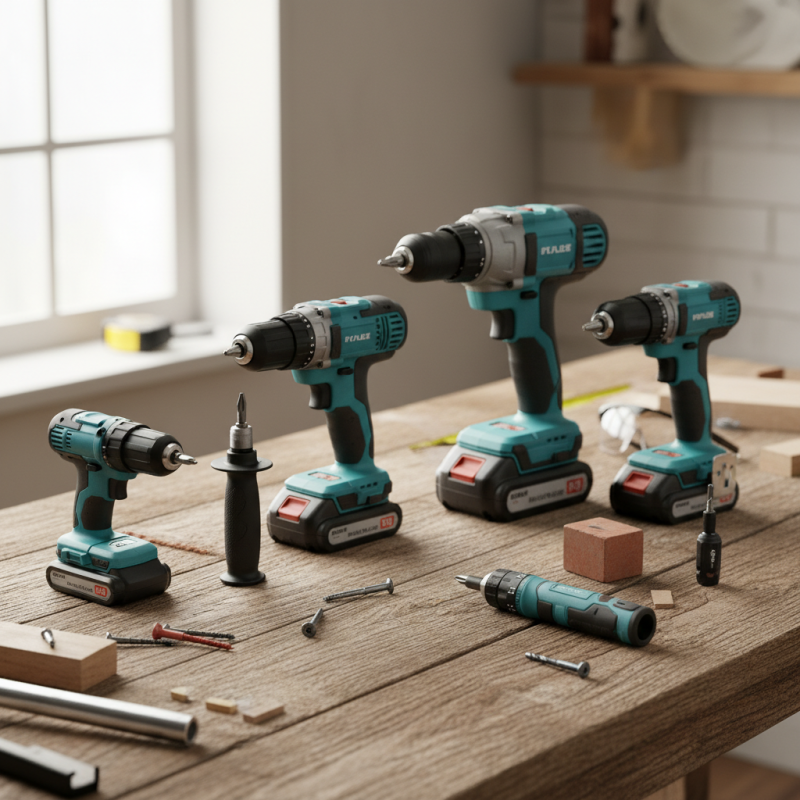
Choosing a drill for home use can be overwhelming. With so many options available, it's essential to understand how to choose the right drill for home use. Different projects require different tools. A drill that excels in one area may not be ideal for another.
When selecting a drill, consider your specific needs. Are you planning to use it for light tasks like hanging pictures? Or do you need something more robust for furniture assembly? Think about the materials you'll be working with. Wood, metal, and masonry each have unique requirements.
Additionally, pay attention to the battery life and weight of the drill. A heavy model may tire you out during extended use. Lightweight options can make your tasks easier, but they might lack power for tougher jobs. Ultimately, reflecting on these factors will lead you to the right choice. The right drill can make your DIY efforts more effective and enjoyable.
Understanding Your Drilling Needs for Home Projects
When selecting the right drill for home projects, understanding your drilling needs is essential.
Start by assessing the types of tasks you'll tackle. Are you drilling into wood for furniture assembly or tackling concrete for home renovations? Each material requires a different approach. For wood, a simple cordless drill may suffice.
For masonry, you might need a hammer drill.
Next, consider the power source. Corded drills offer consistent power, while cordless models provide portability. Think about the size of your projects and where you’ll work. Tight spaces look challenging with bulky drills.
Even experienced users may struggle with ergonomics. Take time to test the weight and handle of potential choices. It can make a significant difference in long-term usage.
Don’t overlook the drill's features. Speed settings and clutch adjustments help tailor your drilling experience. A variable speed option can deliver precise control for different tasks. However, don't feel pressured to choose the most expensive model.
Often, mid-range tools serve well for home use. Reflect on your specific needs and budget to find the best fit.
Types of Drills Suitable for Home Use: Pros and Cons
When choosing a drill for home use, it's essential to understand the various types available. Cordless drills offer maximum portability. They are ideal for household tasks like furniture assembly and wall mounting. However, their battery life can limit prolonged usage. According to a 2022 survey, 70% of homeowners prefer cordless models for their versatility in tight spaces.
On the other hand, corded drills generally provide more power and consistent performance. This constant power supply makes them suitable for heavy-duty applications such as drilling into concrete. A key drawback is their lack of mobility. Users might find them cumbersome when maneuvering around larger projects. A report by the Home Improvement Research Institute indicates that 65% of DIY enthusiasts choose corded drills for their reliability in demanding jobs.
Rotary hammers are another option worth considering, especially for heavy-duty applications. They excel in drilling into tough materials. Yet, they can be expensive and may require extra skills to operate effectively. Reflecting on these factors is crucial in selecting the right drill. A mismatch can lead to frustration and incomplete projects, ultimately defeating the purpose of home improvement.
Top 5 Tips to Choose the Right Drill for Home Use
Key Features to Consider When Selecting a Drill
When selecting a drill for home use, focus on key features. Power is crucial. Consider the voltage for cordless drills, typically ranging from 12V to 20V. Higher voltages produce more torque. If you foresee heavy usage, opt for a stronger motor.
Another aspect is the type of drill. A hammer drill is beneficial for masonry work, while a regular drill suffices for wood and metal. Look for adjustable torque settings. This feature allows you to control how much force is applied, preventing overdriving screws. The weight of the drill also matters. A lighter device is easier to handle for longer periods, but it might lack power.
Additionally, battery life should not be overlooked. A drill with a lithium-ion battery will offer longer usage without frequent recharges. Ensure the battery charges quickly, especially if tasks arise spontaneously. Check reviews for real-world performance, not just specifications. This knowledge helps identify potential faults and enhances reliability.
Evaluating Power and Battery Life for Optimal Performance
When choosing a drill for home use, power and battery life are crucial factors. Higher voltage typically indicates more power, but this isn't the only consideration. For lighter tasks, a lower voltage drill may suffice, while heavier tasks may require something more robust. It’s vital to evaluate your specific needs before making a decision.
Battery life is another significant aspect. Look for drills that offer longer runtime on a single charge. Lithium-ion batteries are popular due to their efficiency and lightweight qualities. A drill with a removable battery can also be beneficial, allowing you to swap it out for a fresh one mid-project. Sometimes, you might find that a more powerful drill drains its battery quickly, leading to interruptions. Assessing how often you'll use the drill can guide you in selecting the right battery capacity.
It's essential to read reviews and seek advice from experienced users. Their insights can reveal hidden pitfalls. Consider testing drills in-store to feel their weight and balance. Many users overlook the importance of comfort during prolonged use. A comfortable drill can prevent fatigue and enhance your overall productivity.
Budgeting: Finding the Best Drill within Your Price Range
When it comes to budgeting for a drill, knowing your price range is essential. Many reports suggest that most homeowners should consider a budget between $50 and $150. This amount reflects the cost of reliable drills that offer solid performance without breaking the bank. At this price point, you can find versatile models suitable for various tasks, from hanging shelves to assembling furniture.
However, be cautious with lower-priced options. In a survey conducted by the Home Hardware Industry Association, 30% of consumers reported dissatisfaction with budget drills. These tools often lack durability and power. Investing a little more can lead to significantly better performance and longer tool life. Research indicates that drills in the $100 to $150 range tend to have higher customer satisfaction rates, with 85% of users recommending them for home projects.
Consider your specific needs. If you plan to use the drill frequently, purchasing a mid-range unit may be wise. On the other hand, infrequent users might gravitate toward the lower end of the scale. Understanding your usage frequency can prevent overspending. It’s also beneficial to set aside a small portion of your budget for essential add-ons like drill bits and batteries.
FAQS
: Assess the tasks you'll tackle. Different materials need different drills.
Corded drills provide consistent power. Cordless drills offer portability for various locations.
Test the weight and handle of the drills. Comfort matters for long-term usage.
Speed settings and clutch adjustments improve control. Variable speeds are helpful for different tasks.
Not necessarily. Mid-range tools often serve well for home use. Reflect on your needs and budget.
Longer battery life reduces interruptions. Choose batteries that allow for easy replacement mid-project.
Higher voltage means more power. However, evaluate your specific needs for lighter or heavier tasks.
Test the drill in-store. Balance and weight affect fatigue during long projects.
Yes, user reviews highlight potential pitfalls. Insights from experienced users are valuable.
Reflect on ergonomic features. Finding the right fit can make a big difference.
Conclusion
When considering how to choose the right drill for home use, it is essential to first understand your specific drilling needs for various home projects. Different types of drills come with their own pros and cons, so assessing which type fits your requirements is vital. Key features such as weight, grip, and ease of use should also influence your decision, ensuring comfort and efficiency during operation.
Further, evaluating the power and battery life of a drill plays a crucial role in optimizing performance for your tasks. Lastly, setting a budget will help guide you in finding the best drill within your price range, balancing quality and affordability. By carefully considering these aspects, you can make an informed choice that meets your home improvement needs effectively.
 DKS ServiceWorks